

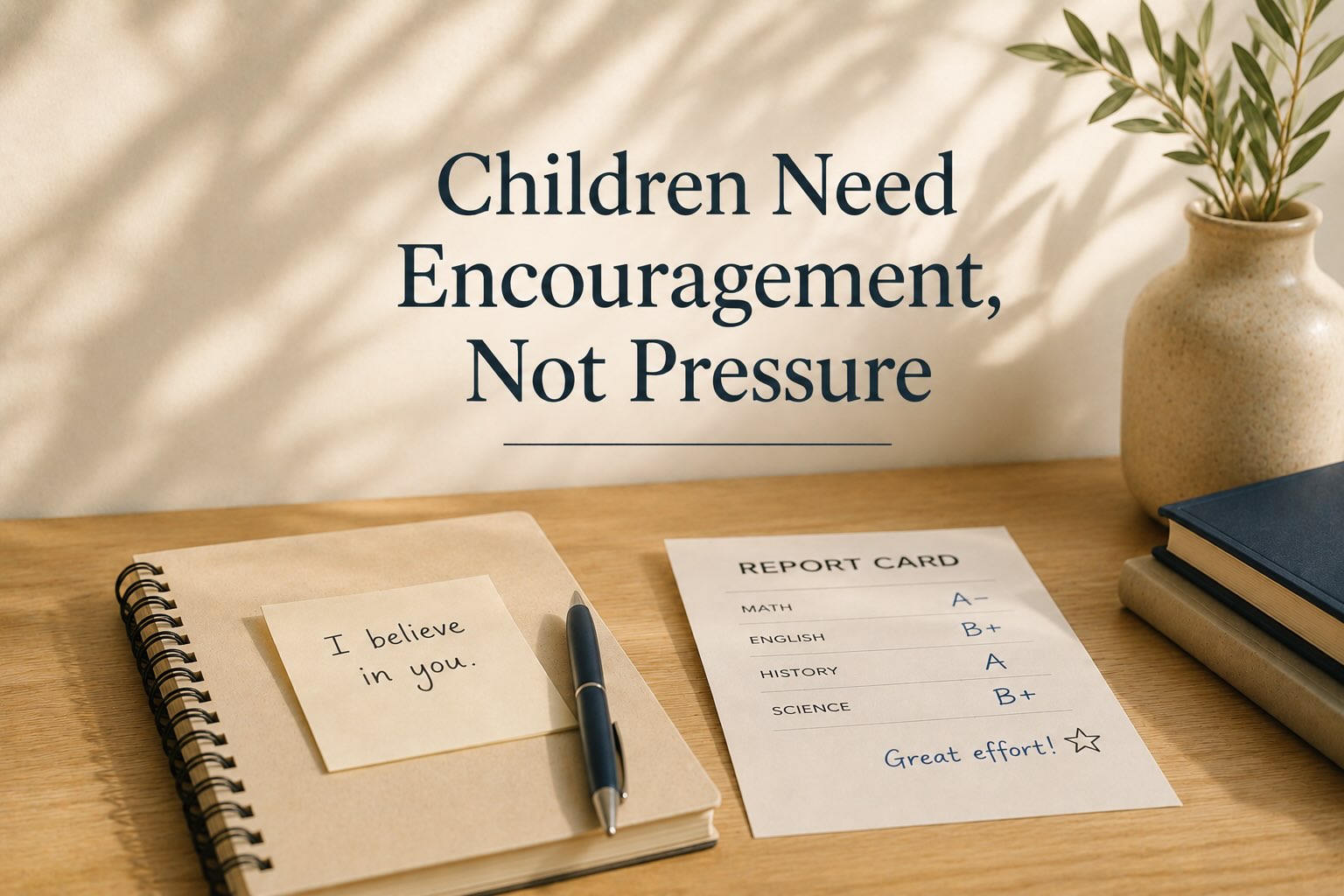
As parents, we want our children to succeed and feel good about themselves. It’s easy to assume those two things naturally go hand in hand. We believe that if we hold the bar high, and push a little, both the grades and the confidence will follow. I believed that too. When I began my doctoral research, I expected the data to support that assumption. Instead, the findings challenged it.
For my research, I surveyed 151 undergraduate and graduate students from across the country. I asked them about the academic expectations they experienced growing up, how much pressure they felt from their parents, and I also measured their self-esteem. I looked at their grades in both high school and college. Going into the study, my predictions were the obvious ones. I expected high expectations would raise both academic achievement and self-esteem, and that perceived parental pressure would have the opposite effect.
The Surprising Findings
Parental expectations, it turned out, had no meaningful connection to grades. Students who felt their parents expected a lot were not earning higher GPAs than those who felt less. Perceived parental pressure didn’t move grades either. Whatever expectations and pressure were doing in these young people’s lives, they weren’t the secret to academic success I had assumed they would be, or what the expectancy-value theory might have predicted.
The finding I keep coming back to is the harder one. Both high expectations and high pressure were linked with lower self-esteem. The more students felt their parents were expecting from them or pushing them, the worse they tended to feel about themselves. This was one of the most consistent patterns in the data. So something many of us do out of love, hoping it will help our children get ahead, seemed instead to quietly wear down how they felt about themselves, and it wasn’t even buying the grades we thought it would.
Self-esteem is an overused word, so I want to be clear about what I mean. I’m not talking about how other people see us or how we are rated from the outside. I mean something quieter and more private, the almost wordless sense of “I’m okay. I’m enough.” When that starts to crack, you don’t see it on a report card. You see it in anxiety, in a child who won’t try something new for fear of failing, and in how harshly they speak to themselves when they fall short.
I found that self-esteem did not look the same for everyone. The link between pressure and lower self-esteem was strongest in young women, who tend to be harder on themselves on these kinds of measures to begin with. It also showed up most during times of transition, like the first couple of years of college, the start of a master’s program or when everything feels uncertain and the future feels wide open.
As students found their footing, the effect seemed to ease. And then it often returned again when the next big decision came along. The same expectation can land very differently depending on where a young person is in their life when it arrives. It’s not just what is being said, but when it is being heard, and from the inside of what kind of stability or uncertainty they are living in at the time. That made me realize parental influence isn’t a simple cause-and-effect story. It depends on timing, context, and where a young person is in their own development when those expectations land.
Why Context Matters
I should say a bit about the timing. I collected this data during the pandemic, when family life, school, and daily routines were all disrupted in ways that are hard to fully separate out. Some students may have softened their view of their parents while watching them struggle through the same uncertainty. Others may have been dealing with their own anxiety and isolation in ways that intensified how they experienced pressure at home.
That context matters. It is a real limitation, but it doesn’t erase the pattern I saw. If anything, it helps me hold the findings more carefully. Rather than treating them as fixed or universal truths, I think of them as a snapshot of how parental expectations and pressure can feel under a very specific set of circumstances, when everyone is stretched, uncertain, and trying to make sense of things in real time.
What the Research Suggests
The wider research keeps pointing in the same direction. Parental pressure has long been linked to test anxiety in students, and newer studies still find that it shapes how young people cope, often through its impact on self-esteem. More recent work connects academic pressure less with better grades and more with anxiety and self-doubt.
At the same time, there is growing evidence on what actually helps. Warmth, responsiveness, and a little breathing room seem to matter a great deal. The kind of involvement that says, “I believe in you, and I’m right here,” is consistently linked with better well-being in young people across cultures. Parental warmth, paired with space for children to make their own choices, keeps showing up alongside resilience.
Expectations themselves aren’t the enemy. It’s how they are carried, communicated, and lived out that seems to matter more than how high they are.
That distinction has shaped how I think about working with families. High standards, when paired with warmth and genuine curiosity about who this child actually is, and with room for them to make their own choices, tend to build a young person up. The same standards, when they come across as pressure or as a constant test of whether they are good enough, tend to do the opposite. Children feel the difference, even when the words sound nearly identical.
A Different Question for Parents
None of this is an argument for expecting less from our children. It is an invitation to ask a different question like, “how are our expectations experienced?” Do they communicate, “I believe in you,” or “you better not let me down?” Is a child’s worth rooted in who they are or only in what they achieve?
These are some of my favorite questions to explore with families. What I keep seeing is that when a child feels truly valued, confidence tends to come first, and a surprising amount of everything else follows.